A Dealership Inventory Strategy That Cuts Auction Cost

Founder & Lead Developer
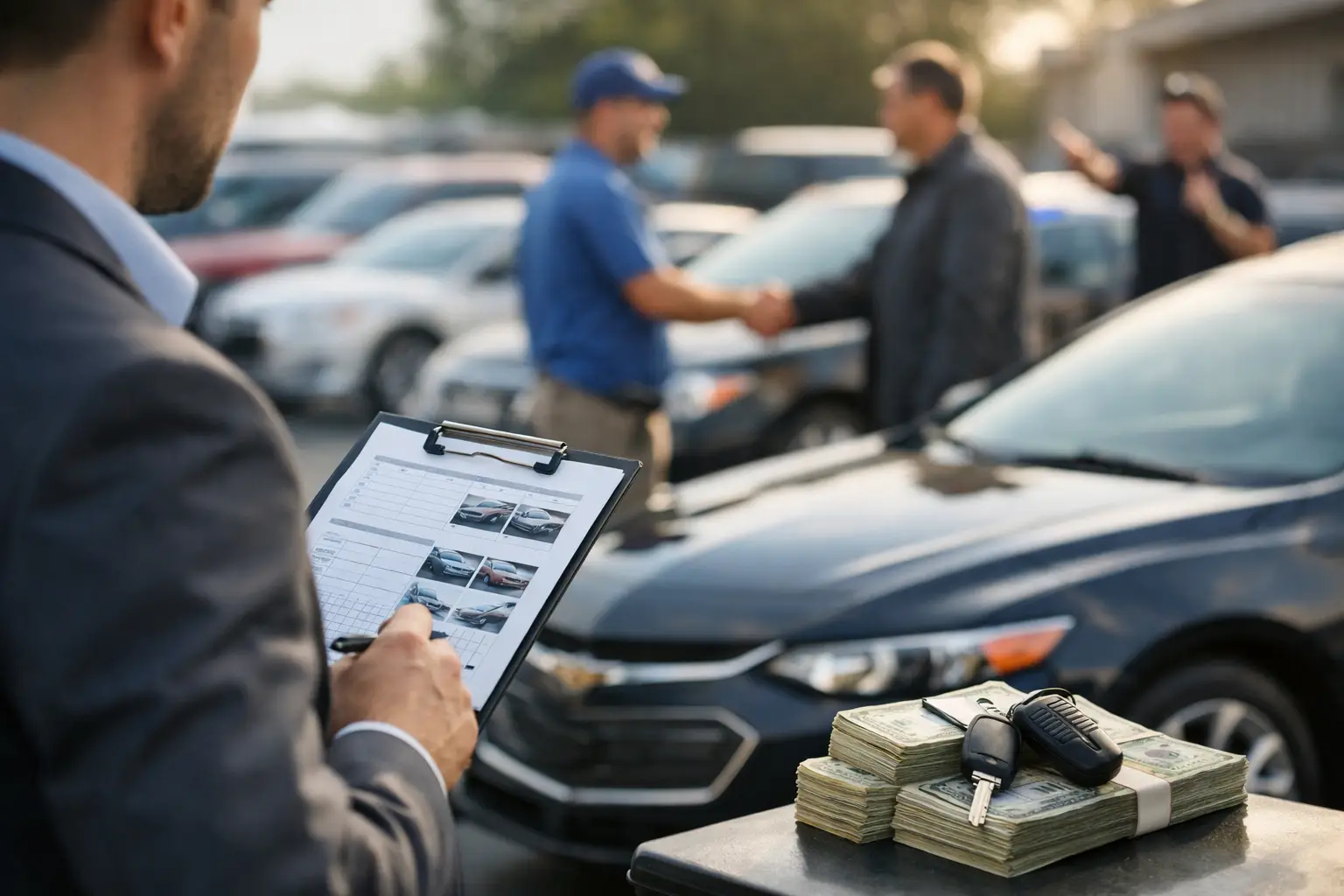
A used-car manager can spend all morning fighting for three units at auction, pay the buyer fee, arrange transport, wait for recon, and still discover one has more history than the condition report suggested. Meanwhile, a local owner who visited the dealership website last night to check a trade value left without talking to anyone. That is not just a missed lead. It is a broken dealership inventory strategy.
The core problem is simple: dealerships pay to create website traffic and paid-ad clicks, then let high-intent vehicle owners leave to get a value from a third-party marketplace. Those marketplaces capture the seller data, build the relationship, and often send that same shopper to a competing dealer or wholesale channel. Later, the dealership buys similar inventory back at auction - with fees, transport, and margin pressure attached.
A better strategy starts with a harder question: how much of your next month's used inventory should come from people who already know your store?
A Dealership Inventory Strategy Starts With Source Mix
Most stores track retail sales sources closely. They know whether a customer came from organic search, paid search, third-party listings, referral traffic, or the service drive. Inventory sourcing often gets less discipline. The used-car department buys what it can find, then works backward to explain the acquisition cost.
That approach works when supply is loose and auction lanes are predictable. It breaks down when desirable units are scarce, floorplan costs are rising, or competitors are bidding aggressively for the same late-model, clean-history vehicles.
Your acquisition mix should be managed as deliberately as your sales mix. Auction purchases may remain necessary, especially for filling gaps in fast-moving segments or meeting model-specific demand. But auctions should be a gap-filler, not the automatic first call.
A balanced sourcing plan typically includes customer trade-ins, direct purchases from website visitors, service-lane opportunities, local outreach, wholesale relationships, and auctions. The right mix depends on your market, brand, recon capacity, and retail demand. The key is knowing the fully loaded cost and conversion rate of each source before deciding where the next unit should come from.
Stop Measuring Auction Cost at the Hammer Price
The hammer price is not your acquisition cost. It is the beginning of it.
For every auction unit, account for buyer fees, sell fees, transport, condition-report misses, post-sale arbitration exposure, time in transit, recon, and the working capital tied up before the unit reaches the front line. A vehicle that looked inexpensive in the lane can quickly consume the gross you expected to make at retail.
Direct acquisition is not free, either. You will have valuation, marketing, appraisal, customer-contact, pickup, title, and recon costs. The difference is control. A direct seller gives the dealership a chance to evaluate the vehicle, set the offer based on local retail demand, and decide whether the unit fits the operation before bidding against half the region.
Use a consistent cost-per-acquired-unit calculation across every source. If a store reports that auction units cost $500 to acquire because that is the visible fee, while direct-purchase leads cost $250 because that is the marketing spend, the comparison is incomplete. Include every cost required to get a retail-ready unit on the lot.
The result will not always favor direct acquisition. Some vehicles are too old, too rough, too far from your retail sweet spot, or priced beyond a workable margin. That is fine. The goal is not to buy every vehicle offered. The goal is to create enough qualified opportunities that your buyers can be selective.
Turn Website Traffic Into an Acquisition Channel
Your website is already doing work for the dealership. It attracts customers researching vehicles, payments, service, trade values, and dealership credibility. Some of those visitors are buyers. Many are also owners who would consider selling or trading if the process were clear and the offer felt credible.
When the only next step is a generic contact form or a link that sends the shopper elsewhere for valuation, the store loses the moment of intent. The owner gets an answer from a third party, and your BDC may never know the vehicle existed.
Put a real-time trade or sell-your-car experience directly on relevant website pages and paid-media landing pages. Capture the vehicle details and owner contact information at the point where the shopper is asking, "What is my car worth?" Then respond quickly enough to keep the conversation from going cold.
Speed matters because valuation requests are rarely exclusive. An owner who submits a vehicle today may have checked two or three other options before lunch. A next-day call from a dealership is not a follow-up strategy. It is a late arrival.
An AI-assisted SMS workflow can qualify the basics within minutes: whether the owner is looking to sell or trade, their timeline, mileage, condition, payoff position, and appointment readiness. The conversation should land in the CRM or DMS your team already uses, with the vehicle data and message history attached. If your team must open another dashboard, copy notes manually, or chase incomplete records, adoption will suffer.
Clutched is built around that operating model: use existing web traffic to surface acquisition opportunities, qualify them quickly, and route the work into the dealership's current process.
Build Rules Before Leads Start Arriving
More appraisal leads do not automatically improve inventory. Without buying rules, they can create noise, inconsistent offers, and disappointed sellers.
Start with an acquisition target by segment. Define the vehicles your store can retail quickly based on price band, age, mileage, model mix, local demand, recon tolerance, and expected gross. A franchise store may prioritize off-brand late-model inventory that complements new-car shoppers. An independent store may focus on affordable payment vehicles with a known turn profile. Neither approach is universally right.
Then give the appraisal team practical guardrails. They need to know the maximum all-in cost, the acceptable condition range, the required gross target, and when to walk away. The best buy is not always the lowest offer. It is the vehicle you can acquire, recon, merchandise, and retail without creating a 75-day-old problem.
This is where stores often confuse volume with strategy. If you buy every vehicle that generates a lead, you are simply moving the auction's lack of discipline onto your website. Qualification and appraisal standards protect the store from bad inventory just as much as they help capture good inventory.
Make the Handoff Operational, Not Aspirational
A direct-acquisition program needs one clear owner. In some stores, that is the used-car manager. In others, it is a dedicated acquisition manager supported by the BDC and appraisal team. What matters is that no lead sits in a shared inbox waiting for someone to claim it.
Set response-time expectations, appointment rules, appraisal responsibilities, and escalation paths. For example, a BDC team can handle initial SMS qualification and secure the appointment, while the used-car department approves offers and closes the purchase. If a vehicle matches a high-priority target, it should receive faster review than a generic trade lead.
Track the funnel weekly: valuation starts, completed submissions, contacts made, conversations qualified, appointments set, appraisals completed, offers made, vehicles acquired, and retail-ready units. Review source quality by campaign, page, ZIP code, and vehicle segment. A campaign producing fewer leads but more retailable acquisitions is usually worth more than a cheap campaign producing tire-kickers and wholesale-only units.
Also measure time. How long does it take from submission to first response? From first response to appointment? From appraisal to purchase? Small delays compound. A lead that waits four hours may become a vehicle another dealer buys before your first text is sent.
Protect Gross With Better Offer Discipline
A direct-to-consumer source gives you a better chance to protect gross, but it does not eliminate market reality. Sellers can compare offers instantly. Your offer must be competitive enough to earn the vehicle while leaving room for recon, market movement, and retail margin.
The practical answer is transparency and process. Explain that the preliminary number is based on vehicle information and that final value depends on inspection, history, tires, keys, warning lights, and actual condition. Train staff not to overpromise digitally just to get an appointment. An inflated online offer can create a frustrated seller, a negative review, and no car.
Offer strength should reflect retail desirability, not emotion. If the vehicle is exactly what your lot needs and your merchandising data supports the retail number, pay up intelligently. If it is a poor fit, do not chase it because the owner is standing in the showroom. Inventory discipline is the point.
The Inventory Advantage Is Ownership
The strongest dealerships will not eliminate auctions. They will make auctions less urgent. That changes negotiating power, lowers the pressure to buy marginal units, and gives the used-car team more control over what lands on the lot.
Your website traffic, paid-media budget, CRM data, service customers, and appraisal process should work together as an owned acquisition engine. When they do, every qualified vehicle owner becomes a conversation the dealership controls instead of a unit another buyer gets to bid on later.
Start with one measurable target for the next 30 days: acquire a defined number of retailable vehicles from first-party digital leads, track the fully loaded cost against your auction baseline, and inspect the process delays that cost you cars. The units you need may already be visiting your website. Make sure they have a reason to stay.
Free tools, no signup
Three calculators for used-car acquisition
Work out how many units you need to source this month, what the auction lane is really costing you, and the most you can pay for a specific car and still hit your gross.
They run in your browser. Nothing is stored.
Frederic Duprat
Founder & Lead Developer
Frederic Duprat is the founder of Clutched, building AI trade-in acquisition software for car dealerships.