How to Turn Website Traffic Into Trade-Ins

Founder & Lead Strategist
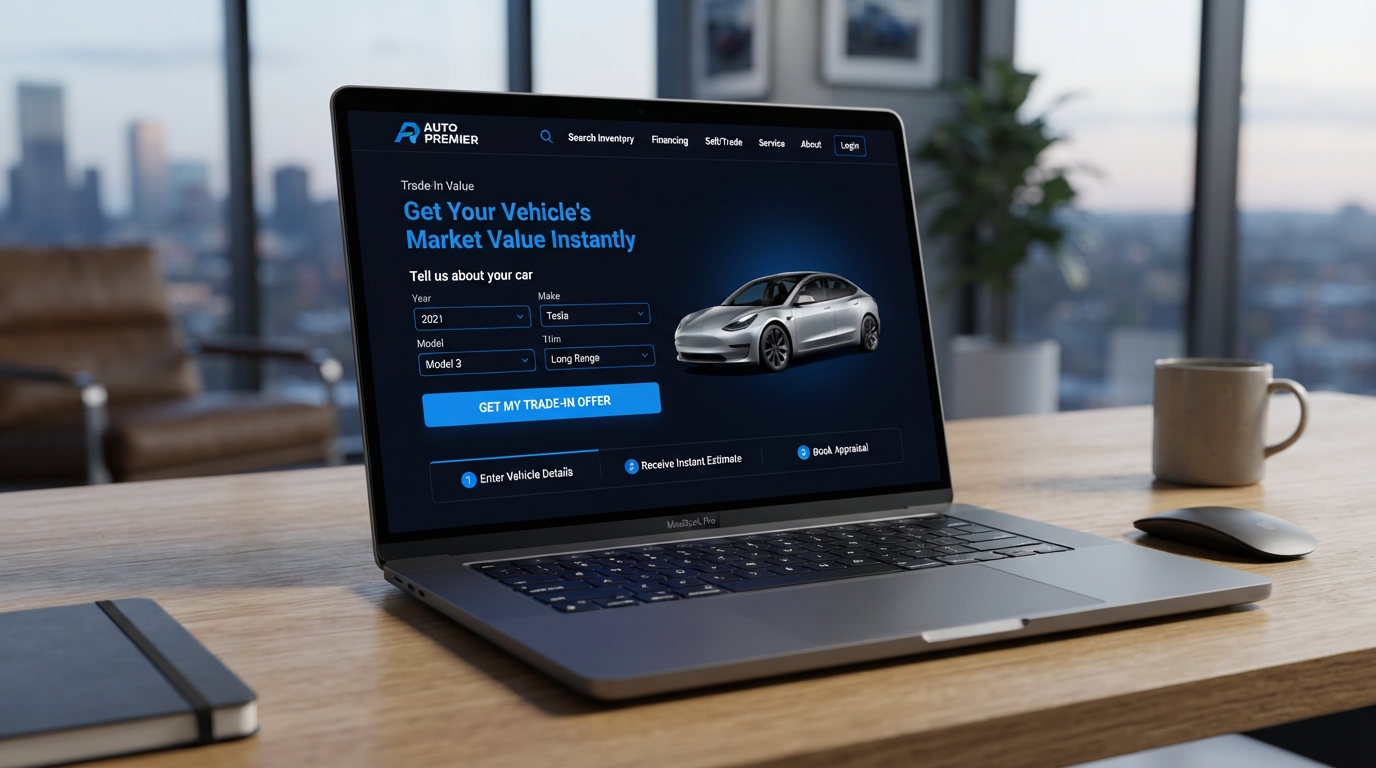
Your dealership already pays to bring local vehicle owners to its website. Some arrive through search, some through Google or Meta campaigns, and some are existing service customers researching their next move. Yet when they want a value for their vehicle, many leave your site, submit their information to a third-party marketplace, and become someone else's acquisition lead.
That is the leak. To turn website traffic into trade-ins, a dealership needs to make the valuation experience fast, credible, and connected to the people who can act on it. The objective is not simply to add another website form. It is to create a first-party inventory pipeline from traffic you already own.
The expensive gap between a website visit and a trade-in
Used-car managers feel the consequence of this gap every week. A customer checks a value on a third-party site, receives follow-up from multiple buyers, and may sell the vehicle before your team knows it was available. A few weeks later, a similar unit appears at auction with buyer fees, transport costs, recon risk, and a thinner gross opportunity attached.
Dealerships often treat website conversion as a sales-lead problem only. That misses half the opportunity. Every qualified owner who visits your site is also a potential vehicle acquisition conversation, whether they are shopping for their next car, booking service, or comparing trade values before making a decision.
The cost is not limited to a lost appraisal. It is the cost of funding the visit, surrendering the seller's information, then competing to buy inventory that may have originated in your own market. Stop buying back your own inventory.
Turn website traffic into trade-ins with a better first step
A trade-in tool works when it gives the consumer a clear reason to engage and gives the dealership enough information to act quickly. The experience should begin with a real-time vehicle valuation on the dealership site or a dedicated paid-media landing page. The owner enters basic vehicle information, sees a value range or estimate, and provides contact details to continue the conversation.
That sequence matters. Asking someone to "contact us" before offering any value creates friction. Sending them away to a generic marketplace gives up control. A valuation-first experience meets the shopper at the moment of intent while keeping the lead, vehicle data, and next action inside your dealership's process.
The valuation is a starting point, not a promise to buy every vehicle at one number. Market conditions, mileage, vehicle condition, title status, local demand, and reconditioning needs still matter. But a useful initial estimate earns the right to ask the questions that determine whether the vehicle is worth pursuing.
Capture the details that make a lead actionable
A phone number alone is not an acquisition strategy. Your team needs the vehicle identification, estimated value, customer contact information, and the answers that separate a possible trade from a purchase-ready unit.
That includes practical questions: Is there a payoff? Are there warning lights, accident history, or major cosmetic issues? Is the owner replacing the vehicle, selling outright, or just researching? How soon do they want to move?
The goal is not to interrogate every owner on the first screen. It is to capture the essentials, then qualify the opportunity by text while interest is still fresh. An AI SMS workflow can ask the next relevant question within minutes, maintain a natural conversation, and surface qualified opportunities for a human handoff. Speed matters because the first dealership to have a useful conversation has a real advantage over the fifth automated email in the customer's inbox.
Keep acquisition leads in the workflow your team already uses
Adding a standalone dashboard is usually where good automotive software goes to die. If the BDC works in one system, the used-car manager tracks appraisals in another, and marketing has a third report, follow-up becomes inconsistent and accountability disappears.
A usable trade-in acquisition process sends the lead directly into the CRM or DMS your store already relies on. The record should include the vehicle, valuation details, owner information, and SMS conversation history so the next person does not have to ask the customer to repeat everything.
For a dealership using DealerSocket, VinSolutions, CDK, HubSpot, or Elead, integration is not a technical nice-to-have. It is how acquisition opportunities become visible in the normal workflow, assigned to the right team, and measured alongside other lead sources.
Decide ownership before launching. In some stores, the BDC handles the first response and routes qualified sellers to the used-car manager. In others, the acquisition manager owns the conversation from the start. Either model can work. What does not work is leaving the lead unassigned because it is labeled as a website valuation rather than a sales opportunity.
Make paid traffic produce inventory, not just shopper leads
Most dealership campaigns are built around sales offers, service specials, or credit applications. Those campaigns have a place, but inventory acquisition deserves its own message and landing-page path. For a deeper look at why a dedicated landing page outperforms a homepage, see our guide on the trade-in landing page that converts ad spend.
A Google search for "sell my car" or "trade in my SUV" is different from a search for a new vehicle. The owner is signaling supply. Sending that click to a generic homepage or a vehicle detail page wastes the intent you paid for.
Build campaign landing pages around a simple value exchange: get a real-time estimate, tell the dealership about the vehicle, and receive a fast follow-up. Keep the message local and specific. A shopper should understand that your dealership is actively looking for vehicles like theirs, not merely offering an online calculator as a vague sales hook.
Performance will depend on your market, budget, inventory needs, and the strength of the offer. A store short on late-model trucks may want a focused campaign for truck owners. A luxury rooftop may prioritize off-lease vehicles within a defined age and mileage range. Broad campaigns generate more volume, while targeted campaigns can produce a better vehicle mix. The right choice depends on what your used-car department can retail profitably.
Measure cost per acquired vehicle, not form fills
A valuation submission is encouraging. It is not the finish line. Dealers should evaluate this channel like any other inventory source: by the number of qualified opportunities, appointments, appraisals completed, vehicles acquired, acquisition cost, reconditioning exposure, and expected retail gross.
Start with a clean baseline. What does an average auction purchase really cost after buyer fees, transport, floorplan time, and the cost of missed condition? Compare that number with the monthly cost of running a website trade-in channel plus any paid-media spend used to support it.
Then track the funnel. How many site visitors start a valuation? How many submit contact information? How many respond to qualification texts? How many receive an appraisal appointment? How many vehicles are acquired and retailed?
Do not judge the program after a handful of leads. Vehicle acquisition has natural variation, and some owners need time before they are ready to transact. At the same time, do not hide behind vanity metrics. If leads are not receiving fast responses, appointments are not being set, or acquired vehicles do not fit your retail strategy, fix the workflow or targeting.
Give the team a process they can execute every day
The technology is only as effective as the operating discipline behind it. New valuation leads need clear response expectations, a named owner, and a practical escalation path for high-demand units. A late-model, low-mileage vehicle that fits your front-line needs should not sit untouched until the next morning.
Train the team to treat these conversations differently from a generic internet lead. The customer may not be ready to buy from you. That is fine. The immediate objective is to understand the vehicle, establish a credible offer path, and earn an appraisal opportunity. If a replacement vehicle becomes part of the conversation, that is additional upside, not the only reason to engage.
Clutched is built around this operating reality: an embedded valuation experience, AI SMS qualification, and lead routing into the systems your dealership already uses. The point is not another login. It is a more controllable way to source retail-worthy inventory from the traffic you already fund. See how it works.
Start with one question at your next used-car meeting: when a local owner visits our website looking for a vehicle value, do we capture that opportunity first, or do we send it away? The answer will tell you whether your website is helping you own your inventory or helping someone else acquire it.
Free tools, no signup
Three calculators for used-car acquisition
Work out how many units you need to source this month, what the auction lane is really costing you, and the most you can pay for a specific car and still hit your gross.
They run in your browser. Nothing is stored.
Frederic Duprat
Founder & Lead Strategist
Frederic has spent over 6 years engineering digital growth systems and technical SEO for car dealerships. With a background in marketing education, he bridges the gap between consumer psychology and automotive technology to turn casual visitors into loyal buyers.